Rose Can Glass SVG: Graphics for Crafts & Branding
As a brand designer and content marketer who’s built visual systems for over 200 small businesses—from online coaches to ceramic studios—I opened the Rose Can Glass SVG, Rose Outline SVG bundle expecting charm. What I found was something more strategic: a quiet, versatile graphic design asset that bridges handmade warmth with scalable marketing utility.
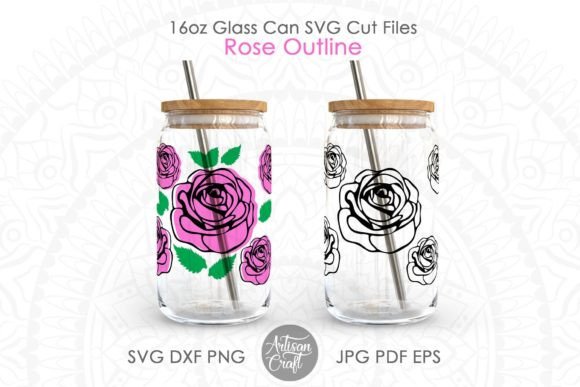
This isn’t just clipart. The Rose Can Glass SVG file bundle contains wraps designed specifically for 16oz cups—ideal for beverage brands, coffee shops, wellness brands, or seasonal product launches—but its real value lies in how cleanly it translates across digital and print contexts. One file delivers a delicate rose outline paired with a soft rose-shaped background; the other offers a clean, single-line rose silhouette. Both are SVG-based, meaning crisp scaling at any size—critical for everything from Instagram story overlays to printable packaging inserts.
A First Impression That Speaks Before You Do
The mood is gentle but intentional: romantic without being cliché, botanical but not clinical, artisanal yet polished. It leans into lifestyle branding—think slow living blogs, herbal tea lines, bridal shower favors, or self-care subscription boxes. It doesn’t scream “luxury” like a gold-foiled monogram, nor does it feel DIY-casual like a hand-drawn doodle. Instead, it occupies that sweet spot of modern design with emotional resonance—ideal for audiences who value authenticity, craftsmanship, and subtle elegance.
Where This Graphic Design Asset Earns Its Keep
In real campaigns, the Rose Can Glass SVG, Rose Outline SVG performs strongest where visual tone matters more than literal messaging:
- Social media graphics: As a decorative frame for quote cards or product close-ups on Instagram and Pinterest—especially when layered over soft neutral backgrounds or muted pastels.
- Packaging design: As an accent on cup sleeves, sticker seals, or insert cards—not as primary branding, but as a tactile signature that reinforces brand personality.
- Editorial design: In blog headers or email banners for seasonal content (e.g., “Spring Self-Care Rituals”) where thematic illustration supports narrative without overwhelming text.
- Canva templates: As a drag-and-drop element in branded template kits for clients or course creators—adding instant cohesion to lead magnets, webinar slides, or media kit visuals.
- Digital ads: When used sparingly—as a corner motif in Facebook or Google Display ads—to soften hard-sell copy and increase dwell time through aesthetic familiarity.
Marketing Goals It Quietly Strengthens
This isn’t a logo replacement—but it *supports* key branding outcomes. Used intentionally, it contributes to:
- Stronger first impression: A consistent rose motif across touchpoints signals intentionality—not randomness.
- Clearer visual hierarchy: When placed near headlines or CTAs, the shape draws the eye without competing for attention.
- Better product presentation: On mockups of mugs, tumblers, or gift bundles, it implies care in curation—not just commerce.
- Improved audience trust: Handcrafted-feeling elements signal human effort, which builds connection with values-driven buyers.
- More memorable campaign visuals: Repeating the rose outline across email, social, and print creates subconscious recognition—even without a logo present.
Best Fit: Contexts That Let It Breathe
This asset shines brightest in hero graphics, campaign headers, branded templates, and decorative brand elements. It works beautifully as a watermark on digital product visuals, a subtle border on printable promotions, or a unifying motif across a content bundle—like a set of seasonal Canva templates or a wellness planner kit. For event flyers or posters, it adds warmth without clutter. As a sticker or merchandise accent, it feels personal and collectible.
Use With Intention—Not Assumption
It’s not universal. Avoid deploying the Rose Can Glass SVG, Rose Outline SVG in formal corporate branding, dense infographics, or low-contrast mobile banners where legibility suffers. It competes poorly with heavy text blocks or minimalist brands built on stark geometry. Skip it for black-and-white legal documents or high-data dashboards—it’s not engineered for functional clarity, but for emotional resonance.
Brand Designer Notes: Test Before You Trust
Before locking it into your brand system, run these checks:
- Test it against your full brand color palette—not just primary hues, but secondary and neutrals.
- Preview both files in black and white: Does the outline retain character? Does the rose-shaped background flatten into noise?
- Drop it into real campaign mockups—on a cup sleeve, in a Pinterest pin, inside a newsletter banner—and step back. Does it enhance—or distract?
- Preview on mobile: Does the detail hold at 120px width? Does spacing feel balanced next to body text?
- Compare it side-by-side with top competitor visuals. Does it differentiate—or blend in?
- Pair it with your brand fonts: Does it harmonize with serif elegance, sans-serif efficiency, script intimacy, or display-bold energy?
- Confirm commercial licensing: This is essential for paid campaigns, client deliverables, or any use tied to revenue generation.
For creative entrepreneurs building a cohesive visual language—whether launching a new digital product, refreshing social media graphics, or designing packaging for a small-batch goods line—the Rose Can Glass SVG, Rose Outline SVG is more than decoration. It’s a thoughtful, licensable piece of commercial design that quietly elevates perception, supports storytelling, and extends brand warmth across formats. In today’s oversaturated feed, sometimes the most powerful branding move isn’t louder—it’s softer, smarter, and sincerely styled.