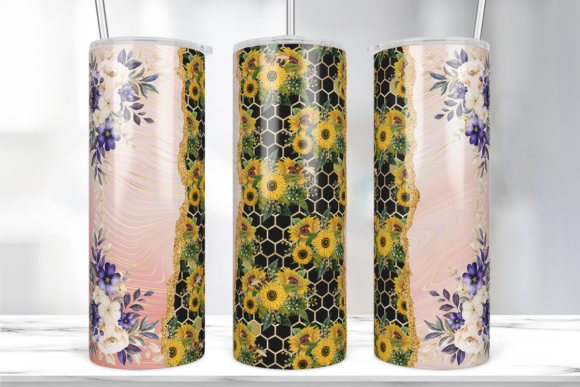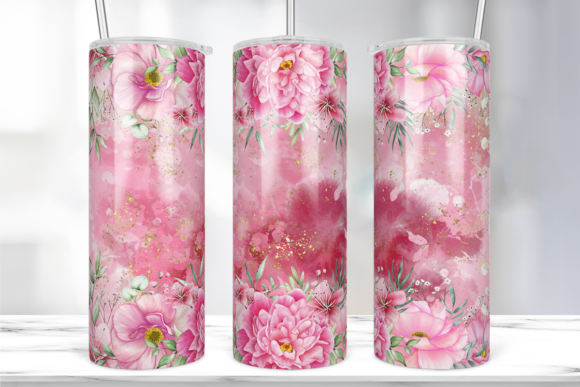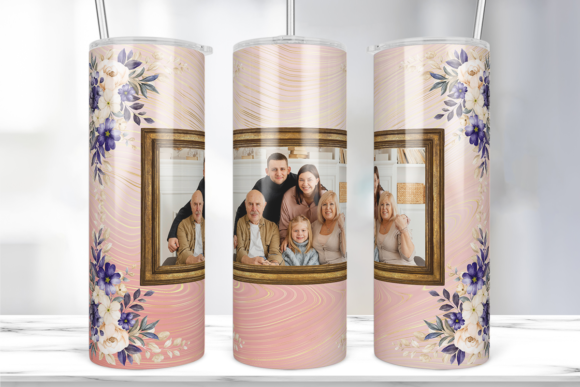
Floral Picture Frame 20oz Tumbler Wrap
As a designer who’s stitched over 3,000 custom projects—from boutique baby onesies to holiday market tote bags—I opened Floral Picture Frame 20oz Tumbler Wrap expecting something clean and versatile. What I found wasn’t just a “pretty floral”—it was a thoughtful, frame-like composition that breathes space, rhythm, and quiet intention. It’s not overly busy, but it’s not minimalist either. There’s weight in the outer vines, delicacy in the inner blossoms, and a subtle taper that hints at curvature—ideal for wrapping around a tumbler, yes, but also surprisingly adaptable for flat embroidery surfaces.
Last week, I tested it on a linen-cotton tea towel for a local café’s spring launch. I resized it to fit a 4” x 6” hoop, digitized a light satin-stitched border, and used soft ecru thread against oat-colored fabric. The result? Customers paused mid-browse—not because it shouted, but because it invited. That’s the quiet strength of this design: it elevates handmade without demanding attention. It feels like a signature, not a sticker.
Where This Design Truly Shines
Floral Picture Frame 20oz Tumbler Wrap lands best where subtlety meets storytelling—think personalized baby blankets, small-batch aprons for florists, or embroidered pillow covers for wedding guest rooms. Its frame structure naturally draws the eye inward, making it ideal for pairing with a monogram, date, or tiny sentiment (just leave room in the center). As a machine embroidery design, it holds up beautifully on medium-weight cotton, twill, and stable knits—especially when paired with tear-away stabilizer and moderate stitch density.
- Custom apparel: Works elegantly on the chest of a lightweight sweatshirt or the back yoke of a relaxed-fit tee—just avoid tight stretch fabrics unless you add cut-away stabilizer underneath.
- Embroidered patch: Clean edges and balanced negative space make it a strong candidate for an iron-on or sew-on patch. Test satin stitch tension first—the outer vines respond well to smooth, consistent coverage.
- Tote bag design: At full size (or slightly scaled), it anchors the lower corner of a canvas tote without overwhelming the fabric’s texture.
- Holiday embroidery: Swap thread colors for sage + cream at Christmas, or dusty rose + gold for Mother’s Day—it adapts without losing its identity.
- Etsy seller asset: As a digital embroidery file, it pairs cleanly with printable mockups. I used it in a lifestyle photo with a ceramic mug and dried lavender—customers immediately recognized it as “gift-ready.”
Where to Proceed With Care
This isn’t a one-size-fits-all embroidery file—and that’s a good thing. Its charm lies in its considered proportions, which means some applications need extra attention:
- Small hoop sizes (under 3.5”): The inner floral cluster loses definition if shrunk too far. If stitching for baby caps or wristlets, simplify or omit inner details before digitizing.
- Textured or napped fabrics: On terry cloth towels or bouclé baby blankets, the fine vine work can blur. Use a medium-weight cut-away stabilizer and reduce fill stitch density by 10–15%.
- Dark fabric: The design relies on contrast in its layering. On navy or charcoal, test thread colors in natural light—matte black thread often reads flatter than glossy charcoal, even if they look similar on screen.
- Curved surfaces (like cap fronts): While the tapered shape suggests adaptability, remember: true cap embroidery requires re-digitizing for crown curvature and bill slope. Don’t assume the straight-tapered sublimation wrap translates directly.
- Frequent-wash items: For kitchen towels or children’s clothing, reinforce satin-stitched petals with a light running stitch outline—or opt for a denser fill stitch in high-friction zones.
What It Adds Beyond Stitching
A great embroidery file doesn’t just stitch well—it strengthens your handmade product’s perceived value. Floral Picture Frame 20oz Tumbler Wrap does that quietly but consistently. When stitched on a linen napkin set, it signals care—not just craft. When used across a boutique’s product line (tea towels, aprons, gift tags), it builds brand consistency without rigid repetition. And for customers? It reads as personal, not mass-produced—even though it’s a digital embroidery file.
I’ve watched buyers linger longer on listings using this kind of intentional framing. It cues trust: “This maker thought about how it lives in the world, not just how it looks on screen.” That matters—especially for Etsy sellers and small shop products competing in crowded digital spaces.
Practical Designer Notes Before You Stitch
Before committing to your first run, treat Floral Picture Frame 20oz Tumbler Wrap like any professional design asset:
- Test it on scrap fabric matching your final product’s weight and stretch.
- Check thread color contrast in both daylight and indoor lighting—what reads softly on screen may vanish on dark fabric.
- Review stitch density: dense fill areas should lie flat; sparse running stitches should maintain clarity.
- Confirm hoop size compatibility—this design scales well, but avoid pushing beyond your machine’s optimal range without re-digitizing.
- Inspect small details (like leaf tips or petal edges) at 200% zoom—they’ll guide your stabilizer choice and needle selection.
- Run a black-and-white mockup: if the composition holds up without color, it’s structurally sound.
- Verify licensing: since this falls under Print Templates and Graphics, confirm whether commercial use of finished embroidered goods is permitted—and whether resale of the digital file itself is allowed.
At its core, Floral Picture Frame 20oz Tumbler Wrap isn’t just another floral—it’s a compositional tool. It gives structure to spontaneity, elegance to everyday objects, and quiet confidence to your craft business. Whether you’re stitching a single personalized gift or building a cohesive collection for your handmade shop, it earns its place in your library—not because it’s trendy, but because it works, thoughtfully, again and again.